
The 2nd WiTCC Aimed to Inspire and Empower Women
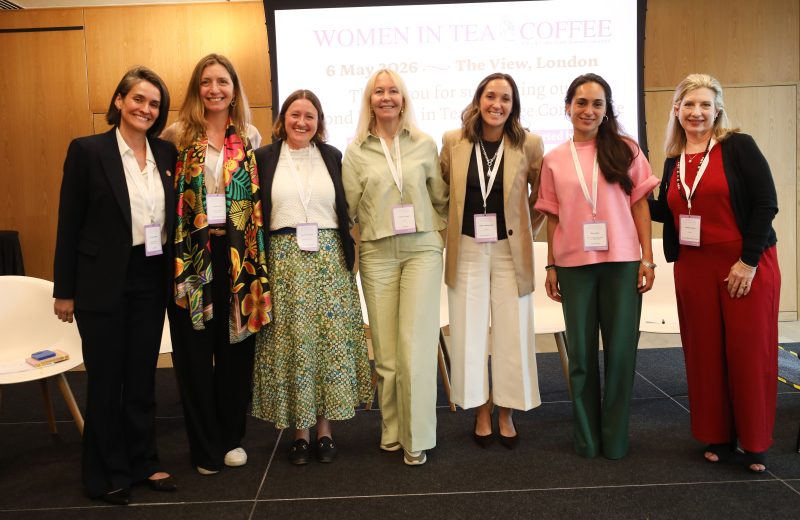
On 6 May 2026, Tea & Coffee Trade Journal hosted the second annual Women in Tea and Coffee Conference (WiTCC), held in London at The View, home of the Royal College of Surgeons. The one-day event featured a plethora of panels, discussions and workshops with the aim of providing a platform for productive discourse for women working in the tea and coffee industries. With speakers and panellists coming from six different countries, the 2026 edition of WiTCC certainly exceeded these expectations.
The event began with masterful talks from the tea key note speaker, Zahra Afshar, head of legal, human rights and sustainability at Ahmad Tea, and the coffee key note speaker, Kathrine Löfberg, chair of the board at Löfbergs, who each highlighted important issues women face across both of their respective industries, as well as how much they value role models and empowering the next generations.
Afshar shone a light on the unfortunate reality of the current state of affairs in tea farming, stating that, “adolescent girls are 27 percent less likely to access technology than adolescent males.”
This brutal statistic underpinned the central message of Afshar’s presentation: that women must not be left behind as agribusiness becomes increasingly digital going forward. Afshar shared her belief that it is important to facilitate not only improved working conditions for women farmers, but also to improve access to education and digital literacy, promoting self-governance as a crucial factor in doing so. She ended her presentation with a call to action for those in attendance, asking: “How can we create visibility for women, and how can we lean on technology to do so?”
In her presentation, Kathrine Löfberg directed her discussion primarily towards female role models, and the work that can be done by the women currently in senior positions to aid those who are just starting out. “I have a responsibility to show the young generation of women that it is possible to take on any role,” Löfberg asserted, highlighting her position as the fourth generation chair of Löfbergs.
Like Afshar, Löfberg was also keen to promote the importance of education for women farmers. Her presentation cast a broad lens over sustainability concerns for working women, including crucially their lack of ability to dedicate time towards making long term plans for the future.
“We must allow farmers the possibility to plan for the future, to not have to focus on preparing for the next day, every day,” she said, adding that she believes the best way to achieve this goal is “empowerment through education.”
This year’s WiTCC also spotlighted the achievements and struggles of women in producing countries, including both farmers and farm workers. Dr Erika Valério, senior gender and agrifood systems expert with the UN FAO, was the event’s final keynote speaker, and she highlighted the UN’s year-long efforts to bring greater attention to women working in agrifood across the globe. As the United Nations General Assembly declared 2026 the International Year of the Woman Farmer, Dr Valério shared a plethora of statistics during her presentation – all speaking to the untapped value of working women. A key quotation from her presentation highlighted the visible impact empowerment could have on tea and coffee supply chains: “If you were to close the gender gap, the global GDP would rise by one percent. That is one trillion dollars,” she said.
Sessions Spotlight Industry Change
The day also consisted of panel discussions with tea and coffee experts on topics such as Careers in Tea & Coffee and Why are Women Pivotal to the Future of Tea & Coffee, where professionals discussed in more detail how they forged their careers despite the obstacles they faced, and how they would encourage others to follow in their footsteps and further empower women in the industries.
Dr Valério’s presentation led perfectly into the first panel session, Women’s Evolving Roles in Tea & Coffee Agribusiness, which looked at the growth of women holding positions within agribusiness throughout the supply chain, and the positive impact they are having. Lucy George, CEO of Petersons Tea Farm in Wales, pointed out that even in Europe there is a huge disparity with land ownership – it is still male dominated. “Women have a huge role to play in supporting and empowering other women.”
Michele Arias, sustainability manager at UNEX Guatemala, explained that because of mass migration in Central America – by men – there are now many more women working in the fields, but they do not have the proper training because they were not afforded the opportunity. However, she noted that “we are starting to see women in indigenous communities stepping up and moving from being contributors to being leaders,” adding that “women want opportunities and once a woman receives an opportunity, everything changes.”
Frances Musgrave, tea sourcing manager at Finlays, shared two of the biggest obstacles women must surpass, “social norms and culture are part of the biggest barriers – it takes a village, but it takes time. Cultural enhancements go hand-in-hand with a strong economy.”
The Careers panel concentrated much of its discussion around the challenges women face when entering the tea or coffee industries. One of the panellists, Valentina Molano Paredes, strategic planning coordinator at SKN Caribecafé, spoke about some of the issues she has faced while working in Colombia. “The biggest brand in the country is recognised as a man’s brand, and has been for years,” she said, reflecting on the state of Colombia’s coffee market.
Noelia Villalobos Soto, executive director at the Specialty Coffee Association of Costa Rica and Sintercafé, furthered this point, adding, “men who are in senior positions want to talk to other men.”
Paredes remained optimistic that progress is being made, however, sharing that her own company “has a 50/50 split [of men and women], and it’s great.”
On the topic of inequality, a key observation from the Careers panel was that “It’s never been a challenge that I haven’t been able to overcome, but it was a challenge that men wouldn’t have.”
This sentiment was shared among many attendees, and was compounded by another idea – that, for progress to be lasting, “we need to bring men to the table as well,” a topic discussed in length during the day’s final panel, Why are Women Pivotal to the Future of Tea & Coffee?
Bringing back all the keynote speakers and new panellists, the day’s final panel saw discussions revolving around not only collaboration with men to support women’s progress, but also the sharing of household responsibilities, the link between trust and career growth, and initiatives that help women from smaller companies succeed.
“Women are industries, they are innovators. You can leverage that in every kind of sector,” said one panellist, emphasising the importance of how women approach problems differently – that it is different to both men, and tradition – and that it is unequivocally valuable.
Alongside the panel discussions, both a tea and a coffee workshop – run by Katy Woollard, product specialist, Whittard of Chelsea, and Laura Metcalfe, coffee trainer, Pact Coffee, respectively – allowed attendees to see what it takes to be an expert in their chosen industries. They also offered a sampling of their delicious teas and coffees (the latter of which were all grown by women).
Shaping the Future
In summary, role models in particular were a hot topic at this year’s event. Throughout the day’s discussions, many expressed the idea that female role models were hard to come by in both the tea and coffee industries which are dominated by men, and there seemed to be a consensus among attendees that strong female role models were very desirable, yet difficult to discover. Despite this, Dr Valério shared her views on the topic when quizzed about it, saying “I think today has been inspiring for all these women here, I am inspired by everyone in this room.”
This sentiment highlights one of the most important messages to have taken from the event — that we can become the change we want to see.
The 3rd Women in Tea & Coffee Conference will take place in London on 5 May 2027. For more information, visit women.teaandcoffee.events.
Matthew Camp joined Bell Publishing in 2025 as editorial assistant and works across the company’s portfolio of magazines.